
A stager holding a fan deck in a north-facing living room faces a measurable trade-off. Dark pigment absorbs light the room cannot afford to lose, yet hides the scuffs that a week of showings guarantees. Choosing by color name rather than photometric specification costs either listing brightness or maintenance time between open houses. See also: seating configurations in compact rooms.
Contents
- Does a dark accent wall make a north-facing living room look smaller?
- How much light does a dark accent wall absorb in a north-facing room?
- Do dark paint colors hide scuffs better than light ones?
- Which wall should be the accent wall in a living room layout?
- Living room decor ideas: balancing dark walls with furniture clearance
- Decision checklist: choosing a dark accent wall for listing prep
Key takeaways
- A dark accent wall reduces reflected illuminance but does not change physical dimensions.
- North-facing windows deliver consistent but low-intensity indirect daylight.
- Dark pigments conceal surface marks differently depending on sheen and abrasion resistance.
- The accent wall should anchor the primary sightline from the entry door or main seating position.
- A dark accent wall shifts visual weight, calling for deliberate furniture placement to maintain circulation paths.
Does a dark accent wall make a north-facing living room look smaller?
A dark accent wall reduces reflected illuminance but does not change physical dimensions. In a north-facing US living room receiving only indirect daylight, paint with an LRV below 20 absorbs roughly 80 percent of incident light, lowering measured lux at the wall plane compared to a standard white above 70 LRV.
Light Reflectance Value (LRV) measures the percentage of visible light a painted surface bounces back into a room. Architectural paint manufacturers list this number on every fan deck and specification sheet. Dark pigments typically register between 5 and 20, while standard whites sit between 70 and 90. A stager choosing a charcoal or navy accent wall for listing photography trades that difference in reflectance against perceived depth. The drywall stays in the exact same position, but the human eye reads a low-LRV surface as closer than a high-LRV one under identical lighting conditions.
North-facing windows compound the deficit. These openings deliver consistent but diffuse daylight without direct sun penetration, producing lower baseline illuminance than south or west exposures. A dark finish on the primary focal wall in such a room removes the little reflected light available to brighten the seating area. Home staging requires walls to photograph clearly from the entry threshold, and a surface absorbing over 80 percent of available photons forces camera sensors to compensate with higher ISO settings or longer exposures.
Paint selection also brings material constraints beyond photometrics. The U.S. Environmental Protection Agency identifies paints, varnishes, waxes, cleaning products, building materials, and furnishings as common indoor sources of volatile organic compounds. Specifying a darker tint often means adding more colorant to the base, which can alter VOC output during curing. Staging timelines rarely allow extended off-gassing before a photographer arrives.
The measurable trade-off goes beyond perceived square footage. Knowing exactly how many lux a specific LRV sacrifices in a north-facing room determines whether the maintenance benefit justifies the lighting cost.
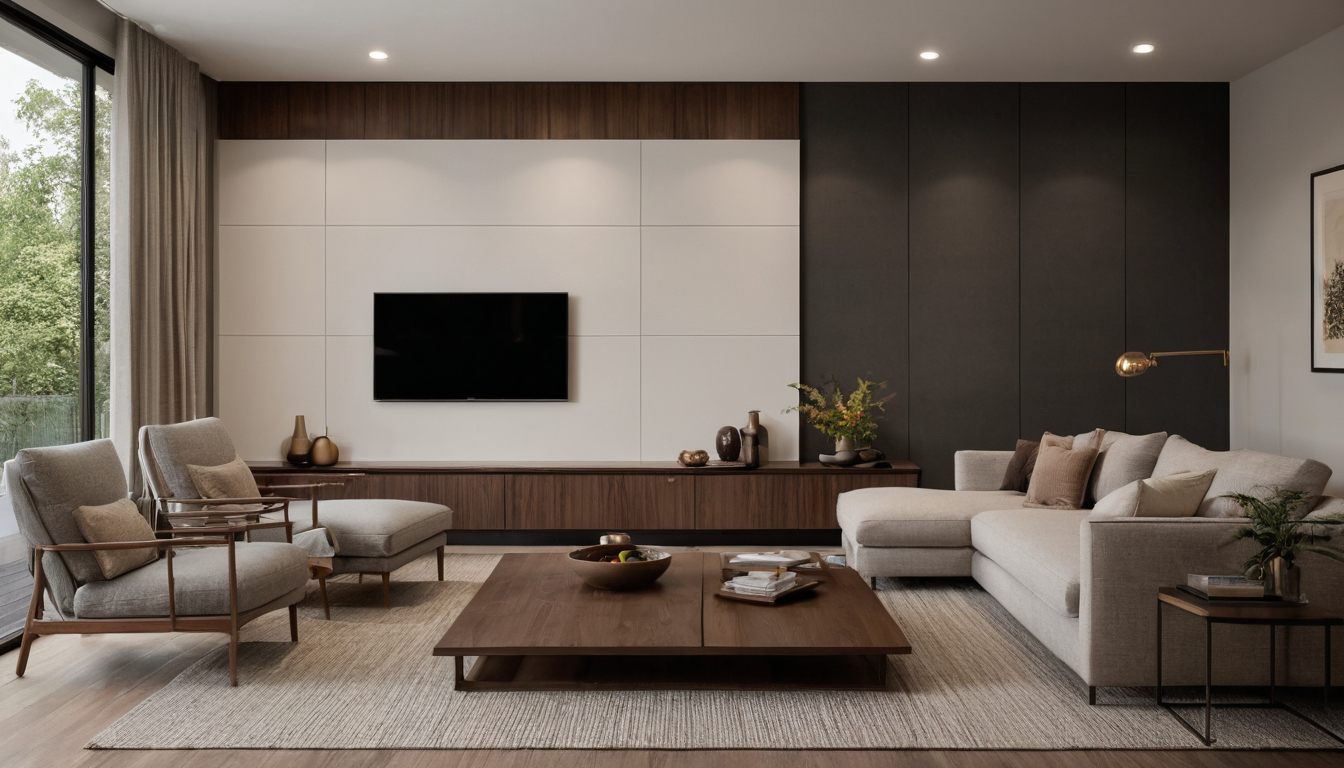
Does a dark accent wall make a north-facing living room look smaller.
How much light does a dark accent wall absorb in a north-facing room?
North-facing windows deliver consistent but low-intensity indirect daylight. A dark matte finish on the accent wall further reduces light reflected into the seating area. The measurable cost is fewer lux reaching adjacent surfaces, which matters most in rooms under 150 square feet with single-window exposure.
Window orientation sets baseline illuminance before paint enters the equation. Parametric analysis of 1,872 simulated cases demonstrated up to a 15 percent difference in spatial daylight autonomy between north-facing and west-facing windows (Scientific Reports, PMC). North-facing glass supplies diffuse sky radiation without direct solar gain, meaning the walls must bounce available photons back into the room volume. A pigment absorbing 85 percent of incident light leaves very little to bounce.
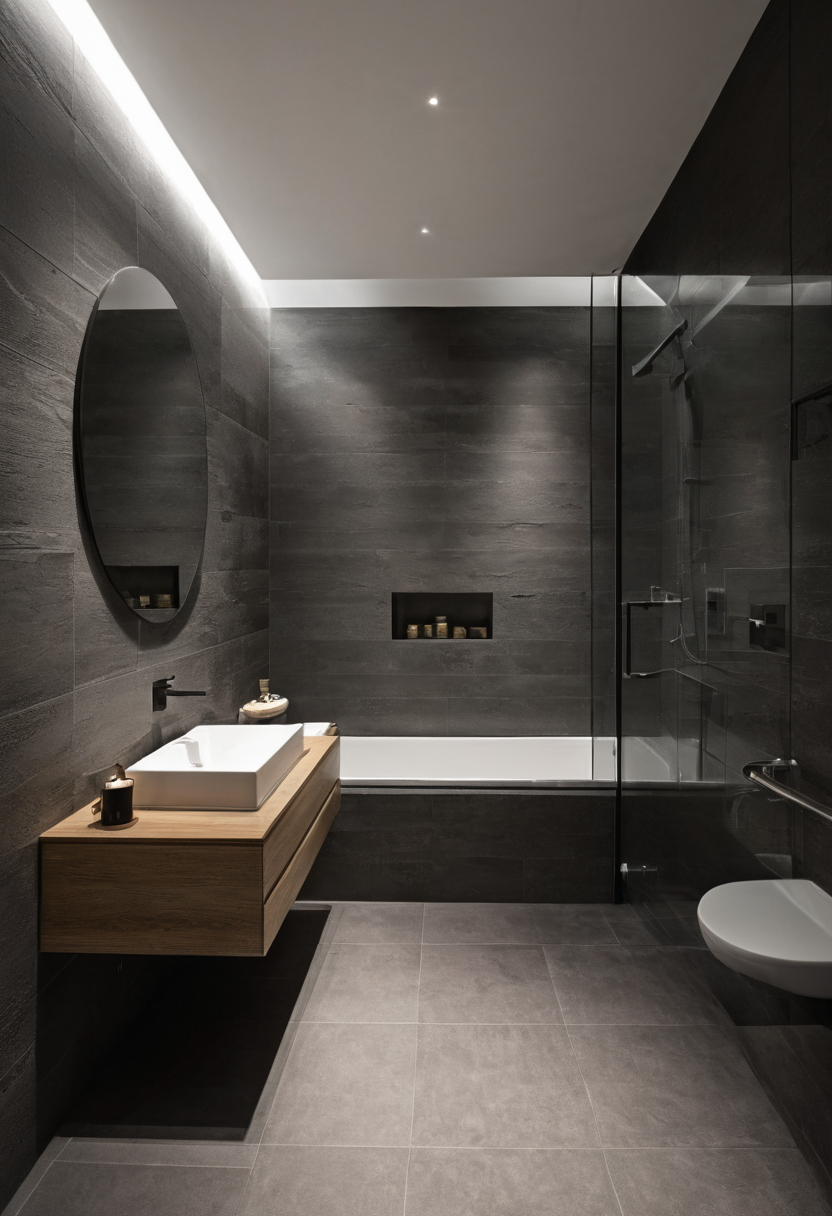
How much light does a dark accent wall absorb in a north-facing room.
| Wall Surface LRV | Approximate Light Reflected | Effect on North-Facing Room Illuminance |
|---|---|---|
| 80 (standard ceiling white) | 80% | Maximizes diffuse reflection across the room volume |
| 50 (mid-tone gray) | 50% | Moderate absorption; acceptable with multiple windows |
| 15 (dark navy or charcoal) | 15% | Absorbs 85% of incident daylight; requires supplemental lighting |
| 5 (near-black) | 5% | Functions as a light sink; drastically reduces perceived depth |
Do dark paint colors hide scuffs better than light ones?
Dark pigments conceal surface marks differently depending on sheen and abrasion resistance. Dark walls mask certain stains but reveal dust, lint, and shallow scratches more readily than mid-tone satins. Durability depends on the binder and ASTM D2486 scrub-test rating, not hue alone.
A staging decision checklist for dark versus light accent walls covers five conditions to check before opening a can. Use this list to evaluate whether a dark color survives a showing schedule or creates maintenance work between open houses.
- Traffic path proximity: Walls within 36 inches of a primary walking route encounter shoulder bags, furniture edges, and hand contact daily. Dark matte finishes in these zones show transfer marks from lighter materials immediately.
- Sheen selection: Flat and matte dark paints absorb light and hide drywall tape seams, but they resist cleaning poorly. Eggshell or satin sheens add washability but highlight substrate imperfections under raking light.
- Binder composition: 100% acrylic binders resist burnishing (the shiny trails left by rubbing) better than vinyl-acrylic blends. Burnishing on a dark wall appears as a permanent light patch.
- Dust load environment: Forced-air heating systems circulate particulate that settles visibly on dark surfaces within days. Lighter walls camouflage the same accumulation.
- Ventilation during application: The U.S. Environmental Protection Agency recommends increasing ventilation when using products that emit volatile organic compounds indoors, including architectural paints (EPA indoor air quality guidance). Open windows accelerate curing but introduce outdoor dust to wet dark paint.
High-traffic residential walls require coatings rated for at least 400 scrub cycles under ASTM D2486. Premium interior acrylics designed for living areas frequently achieve 1,000 to 3,500 cycles. A dark eggshell rated at 2,000 cycles will tolerate repeated wiping with a damp cloth far longer than a dark flat rated at 200 cycles. Pigment depth matters less than resin film thickness and cross-linking density. When selecting paint for a staged listing, request the technical data sheet and locate the ASTM D2486 value rather than relying on terms like “washable” printed on the label. Stagers evaluating seating configurations in compact rooms should prioritize higher scrub ratings because tighter clearances guarantee more frequent wall contact from furniture and foot traffic.
Light-colored dust, drywall joint compound residue, and pet dander contrast sharply against dark backgrounds. A white wall hides a layer of household dust; a charcoal wall displays it as a visible gray film within 48 hours in a forced-air heated home. Low relative humidity increases static charge on latex paint films, attracting and holding airborne particles faster. The U.S. Environmental Protection Agency notes that damp spots and condensation must be addressed promptly to prevent mold growth (EPA mold and moisture guide), meaning exterior-facing dark walls in humid climates risk both moisture damage and visible mineral deposits from evaporated water.
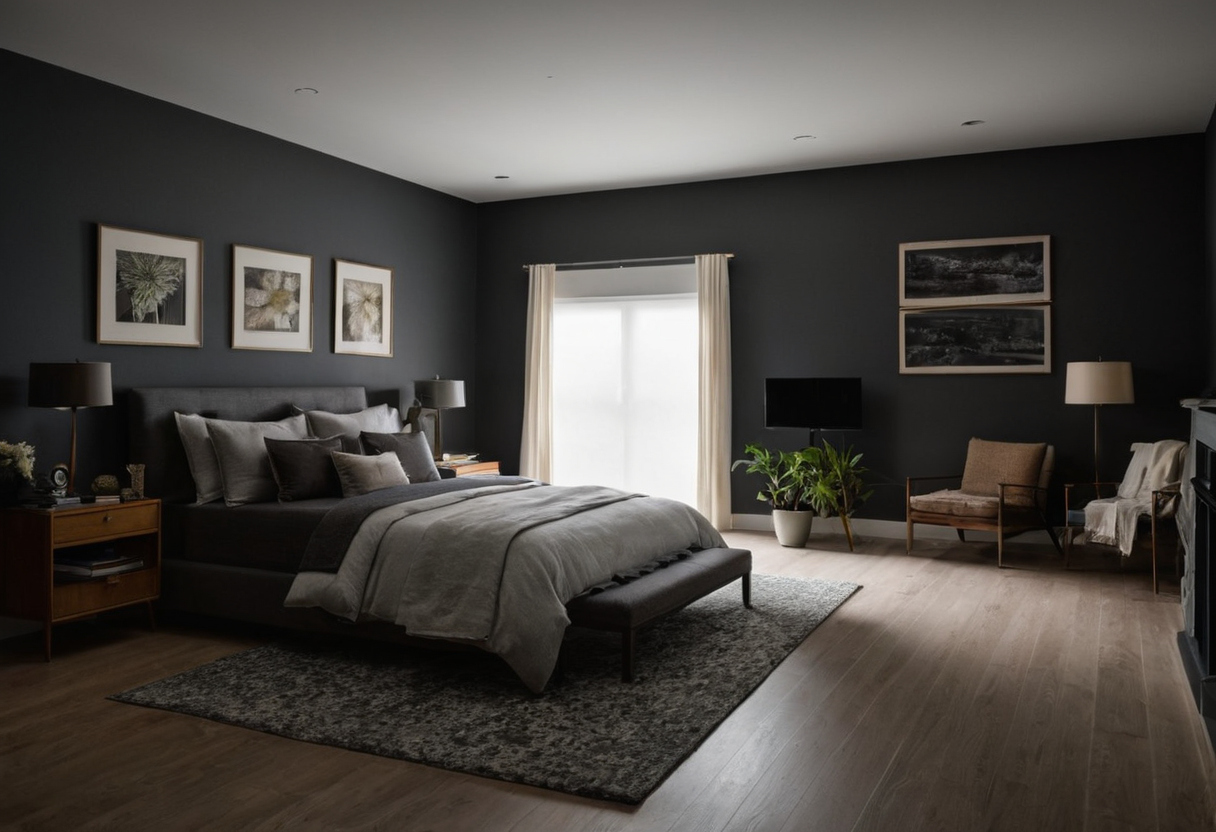
Do dark paint colors hide scuffs better than light ones.
Shallow scratches pose an optical problem unique to dark pigments. Drywall paper and gypsum are naturally pale. Any abrasion deep enough to penetrate the paint film exposes white substrate, creating a high-contrast line that shows clearly in listing photography. On a light wall, the same scratch blends into the surrounding tone. Raking light from sconces or afternoon sun entering at a low angle amplifies every micro-imperfection on a dark satin finish, while a flat finish absorbs that light but sacrifices the scrub resistance detailed above.
Once the durability trade-offs are quantified, geometry remains. Knowing which wall receives the most grazing light and the least physical contact determines where a dark accent belongs in a given floor plan.
Which wall should be the accent wall in a living room layout?
The accent wall should anchor the primary sightline from the entry door or main seating position. A dark color on a short wall minimizes total light absorption while drawing focus. Avoid painting the window wall dark, as framing north-facing glass with low-LRV paint maximizes glare contrast.
A rectangular living room typically has one natural focal wall opposite the doorway. Painting that surface a dark shade directs attention inward and preserves reflected daylight on the longer side walls. Choosing the long wall instead doubles the square footage of light-absorbing pigment, dropping overall room illuminance noticeably during overcast afternoons.
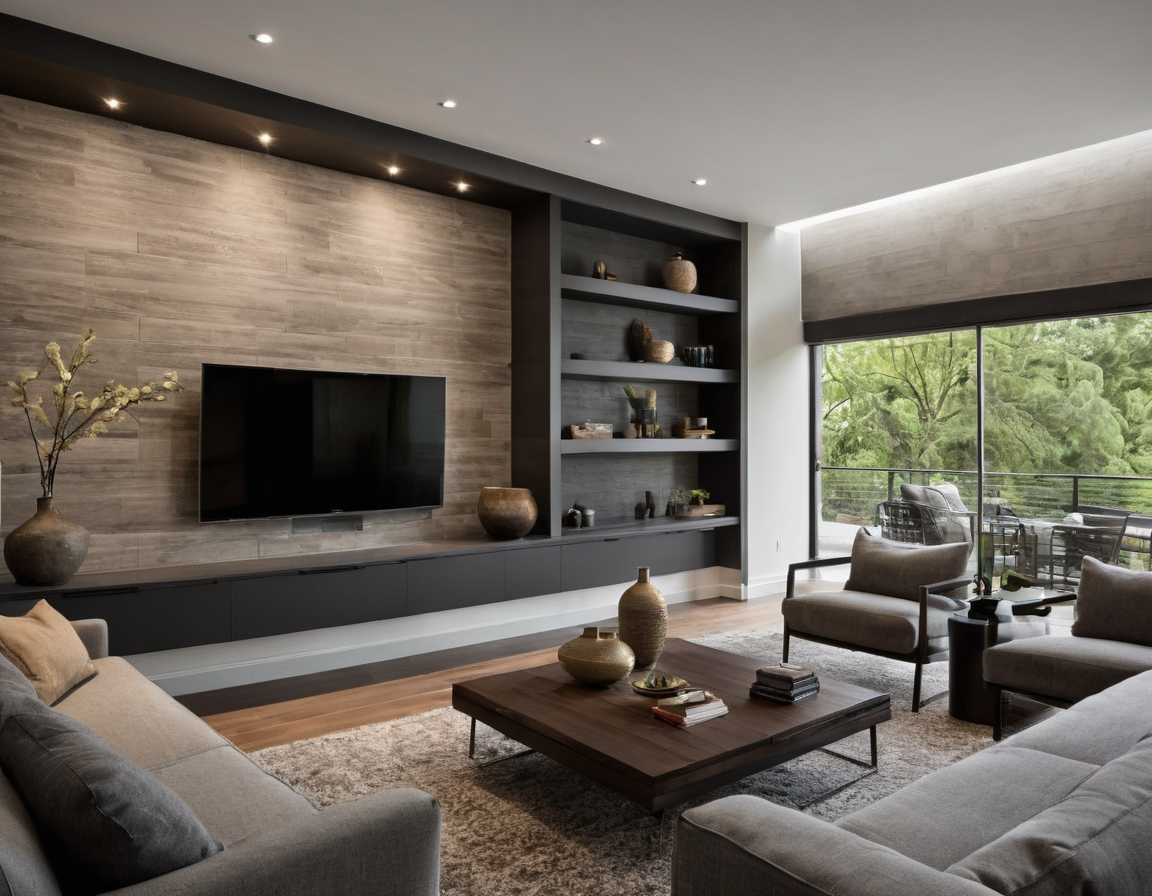
Which wall should be the accent wall in a living room layout.
The wrong surface introduces measurable risks to listing photography and daily use. Check these conditions before opening a can:
- Window wall selection: A dark surround draws the eye toward bright glass, making the rest of the room read as shadowed and cramped in wide-angle shots.
- Long wall selection: Doubling the painted area from roughly 100 to 200 square feet in a standard room removes more bounced light than a single short wall.
- Sightline interruption: A dark wall placed perpendicular to the entry path pulls focus sideways, breaking the expected depth perception buyers rely on during walk-throughs.
Paint remains the most accessible finish for this adjustment, though wall panel assemblies and finish systems offer an alternative when texture or acoustic performance matters more than color alone.
Once the correct wall is identified, the next constraint is physical: how does that dark plane interact with the sofa depth and traffic lanes? Balancing those dimensions determines whether the room works as well as it photographs.
Living room decor ideas: balancing dark walls with furniture clearance
A dark accent wall shifts visual weight, calling for deliberate furniture placement to maintain circulation paths. Standard clearance rules hold at 36 inches for primary walkways and 18 inches between a sofa and coffee table regardless of paint color. Dark backgrounds need adequate lamping so seating areas read as planned rather than cramped.
Balancing these clearances and lumen targets determines whether a dark finish survives a showing or sabotages the floor plan. The final step is checking those numbers against a staging checklist before opening the doors to buyers.
Decision checklist: choosing a dark accent wall for listing prep
Select a dark accent wall only when the north-facing room exceeds 150 square feet, has multiple light sources, and requires scuff concealment for showing readiness. Verify the paint meets minimum ASTM D2486 scrub ratings. If the room relies on a single window under 15 square feet, prioritize higher LRV options instead.
A home stager prepping a listing needs a repeatable test before opening a fan deck. Check these four criteria in every north-facing living room:
- Floor area. Confirm the room measures at least 150 square feet. Smaller footprints lose baseline illuminance too quickly under sub-20 LRV pigments.
- Window ratio. Require more than one window or a single glazed opening exceeding 15 square feet. A lone small window cannot bounce enough indirect daylight off a dark surface.
- Scrub rating. Check the manufacturer data sheet for an ASTM D2486 result of 400 cycles or higher. Lower counts fail during active showing weeks.
- Supplemental lighting. Plan ceiling or floor fixtures to replace absorbed lux if the LRV drops below 15.
The staging decision rests on photometric thresholds rather than color preference. A room that passes all four points gains the maintenance benefit of a dark finish without sacrificing perceived volume in listing photography. A room that fails even one criterion needs a lighter specification to survive buyer walkthroughs.
For more on this topic, see other guides on this site.