
luxury italian fabrics remain relevant because many interiors still misuse the language of figured cloth. Designers often call any ornate woven textile “damask,” but the category matters. Once the vocabulary is wrong, the specification usually follows it in the wrong direction. A dressing room with figured silk panels needs the logic of weave structure, not vague period styling.
Architectural Digest’s explainer on Jacquard gives the cleanest practical entry point: the Jacquard system automated the control of warp threads through punched cards, making it possible to weave highly complex figured patterns with much greater flexibility than earlier methods. That matters in interiors because it separated pattern complexity from the need for visual heaviness. Source: Architectural Digest, Jacquard Fabric.
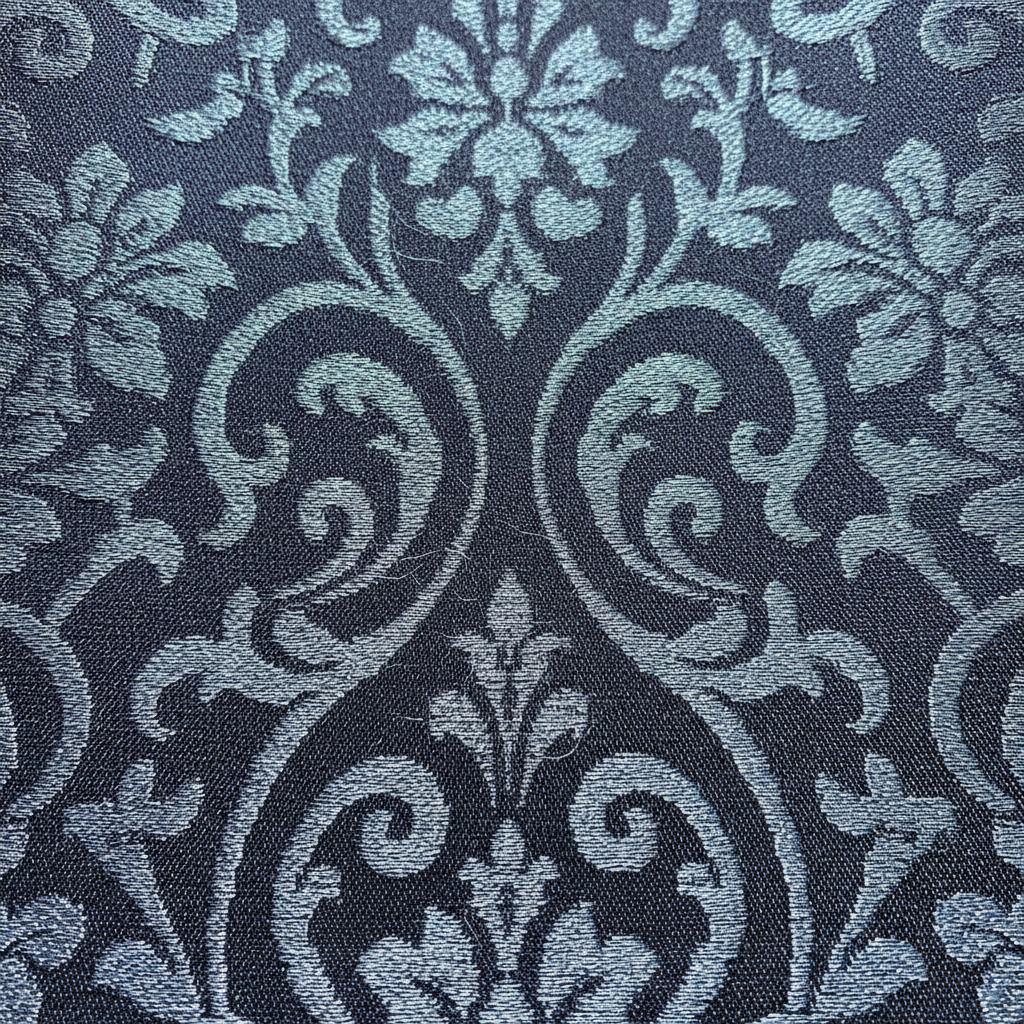
What designers call damask is usually a figured fabric in which pattern and ground are created by changes in weave, often with satin and sateen contrasts. The result can be dramatic without being bulky. In a wardrobe room that is a major advantage. The textile can hold visual order on a panel or screen while remaining flatter and easier to maintain than pile-heavy fabric in the same location.
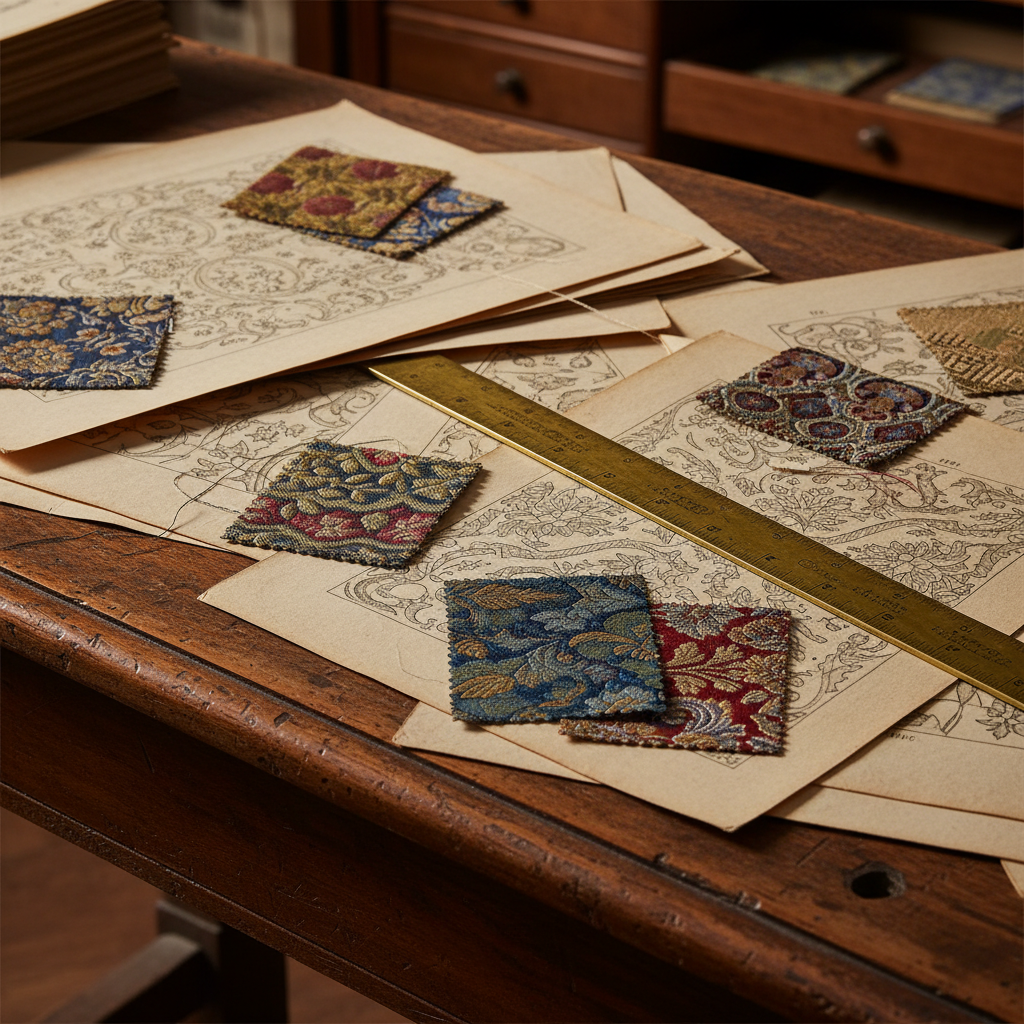
The V&A’s material on James Leman and Spitalfields silk design is useful here because it shows how deeply pattern design and weaving knowledge were linked. These were not decorative afterthoughts. They were systems of drawing, translation, and production. That is the right frame for a bespoke interior today. A figured textile belongs where line, rhythm, and repeat scale matter. Source: V&A, The Ingenious Mr Leman.
The practical value in a dressing room is control. A damask-like woven silk can stabilize a wall plane, soften a mirrored zone, or bring pattern into a compact room without the visual push of strong print. Because the pattern is structural rather than surface-applied, the room often feels quieter and better organized even when the fabric is visibly detailed.
The broader textile context also matters. The European Commission’s textiles strategy treats durability and circularity as central issues for the sector. A figured woven textile that earns its place through longevity, visual discipline, and repairable application is a smarter interior choice than a trend-driven finish that will be stripped out quickly. Source: European Commission textiles strategy.
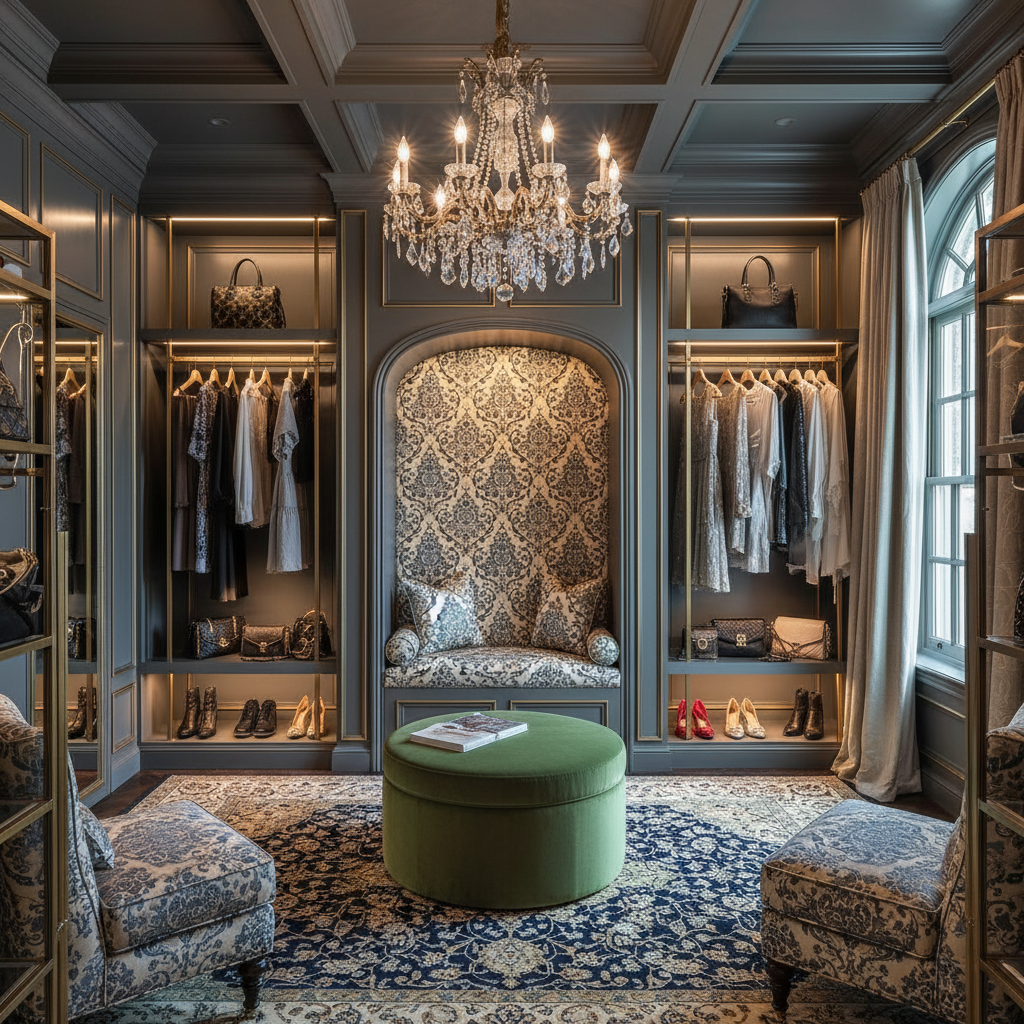
The reason interiors still benefit from Jacquard logic is simple. It lets designers create pattern through engineering rather than excess. In a dressing room, that usually produces a better result: less noise, more control, and a stronger sense that the room has been designed rather than merely decorated.